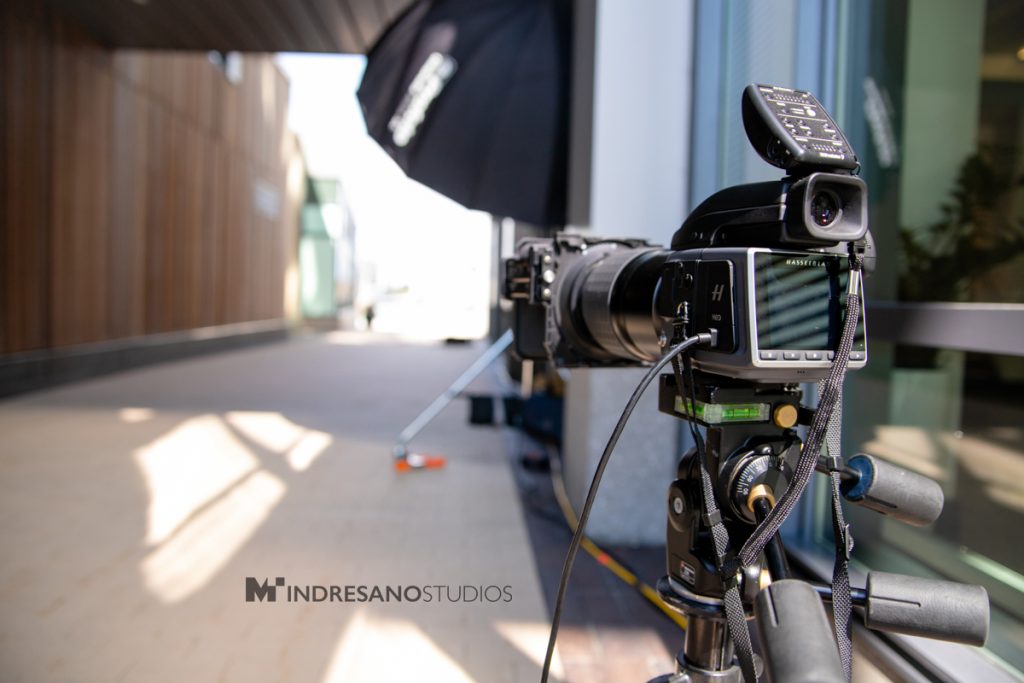
How to Prepare Your Brand for a Commercial Photography or Video Production

Planning a commercial photography or video production involves much more than deciding what you want to capture. From defining your creative direction to preparing products, coordinating talent, and planning final deliverables, the decisions made before production begins have a significant impact on the finished work.

Whether you are preparing for a product launch, developing a new advertising campaign, updating your website, or creating photography and video for multiple marketing channels, having a clear plan helps your production team bring your vision to life.

At Indresano Studios, we work with brands, marketing teams, and agencies to produce commercial photography, video, CGI, animation, and other visual content. Here are the key steps to consider before your next commercial production.

Define What You Need the Production to Accomplish

Before planning a shoot, establish what you want the finished content to achieve.

Are you launching a new product? Developing a national advertising campaign? Refreshing your brand’s visual identity? Creating content for an e-commerce website? Or producing a combination of photography and video for an upcoming marketing initiative?

Your goals will influence nearly every production decision, including creative direction, locations, talent, styling, equipment, and final deliverables.

For example, a product launch may require clean product photography, lifestyle imagery, detail shots, and a commercial video. A brand campaign may call for a more developed visual concept involving models, wardrobe, set design, props, and multiple locations.

Clearly defined objectives give your commercial production team a starting point for building the right approach. The team at Indresano Studios can help you!

Establish Your Deliverables Before Shoot Day

One of the most important steps in planning a commercial photo or video shoot is determining exactly what you need at the end.

Rather than starting with the assumption that you need a photoshoot or a video, consider the full range of assets your marketing team will use.

These might include:

  • Commercial and lifestyle photography
  • Product photography for websites and e-commerce
  • Hero images for advertising campaigns
  • Commercial videos and brand films
  • Short-form video for social media
  • Product demonstrations
  • Vertical and horizontal video formats
  • Animated graphics and motion content
  • CGI product renderings and 3D animation
  • Retouched images and composited visuals

Think about where each asset will appear and whether you need different versions, crops, lengths, or formats.

If you need both photography and video, communicate that early. A production can often be planned to capture both, with creative direction, lighting, sets, talent, and scheduling coordinated around the complete list of deliverables.

The earlier our production team at Indresano Studios understands the scope, the better we can plan the shoot.

Develop a Creative Brief and Visual Direction

A creative brief helps translate your goals into a clear visual approach.

It does not need to be a lengthy document. It should communicate what you are trying to accomplish, who the content is for, and how you want the brand to be represented.

Useful information includes:

  • Your brand’s positioning and target audience
  • The purpose of the project
  • Key messages or product features
  • The intended look and feel
  • Brand guidelines and visual references
  • Required products, people, and environments
  • Where the content will be used
  • Any mandatory brand elements

Reference images and mood boards can be particularly helpful. They give the creative team a starting point for discussing lighting, composition, color, styling, backgrounds, and overall atmosphere.

References are not necessarily meant to be copied. Instead, they help establish a shared understanding of the creative direction before production begins.

We at Indresano Studios can then use that information to develop an approach that fits your brand and project.

Prepare Your Products, Props, and Materials

For product and food photography, preparation is especially important because the condition of the subject directly affects what can be captured on set.

Before production, confirm that all required products, packaging, samples, and supporting materials will be available in the quantities and condition needed.

Depending on the project, this may involve:

  • Shipping products to the studio in advance
  • Confirming final packaging and product variations
  • Preparing extra samples in case of damage or unexpected issues
  • Providing product specifications and reference materials
  • Identifying required props, surfaces, and backgrounds
  • Confirming food ingredients and specialty items
  • Providing CAD files or 3D assets when relevant to CGI
  • Identifying products that require special handling or assembly

For food photography, additional planning may be needed for ingredient sourcing, food styling, preparation, and the timing of individual shots.

For a CGI project, approved product dimensions, CAD files, packaging artwork, and material references can help establish an accurate starting point.

Our team at Indresano Studios can help identify what needs to be supplied, sourced, built, or prepared before the shoot.

Confirm Talent, Styling, and Locations

If your project involves people or lifestyle environments, these details should be addressed well before shoot day.

Casting may involve selecting models, actors, families, professionals, or other talent who fit the brand and intended audience. Wardrobe, hair and makeup, props, and set design help establish the visual character of the production.

Location decisions are equally important. A project may call for a studio environment, a residential setting, an office, an outdoor location, or a custom-built set.

Your production team at Indresano Studios can help coordinate these elements based on the creative brief, schedule, and production requirements.

It is also important to confirm usage requirements for talent and locations. Where and how long the resulting content will be used can affect licensing, agreements, and production costs.

Bringing these decisions together early helps the team arrive on set prepared to execute the creative direction.

Plan for Photography, Video, and CGI Together When Needed

Not every project requires multiple production methods, but some campaigns benefit from combining them.

A product launch, for example, may require traditional photography for lifestyle images, video for a commercial campaign, and CGI for product variations or visuals that would be difficult to capture practically.

The key is to determine which approach makes sense for each deliverable.

Commercial photography is well suited to capturing products, people, food, environments, and campaign imagery.

Commercial video production can communicate a brand story, demonstrate a product, introduce a service, or create content for advertising and digital platforms.

CGI and 3D visualization can create detailed product imagery, virtual environments, product variations, and animation. It can also be useful when a product is still in development or a physical setup would be difficult to achieve.

Animation and motion graphics can explain processes, highlight product features, or add movement to campaign visuals.

When a project includes several of these elements, coordinating them through one production plan helps maintain visual consistency and ensures the final assets work together.

Understand Your Post-Production and Delivery Requirements

The shoot is only one part of the production process. Once photography and video are captured, the assets may need significant work before they are ready for use.

Photography may require retouching, compositing, color correction, background cleanup, or image preparation for different formats.

Video may require editing, color grading, sound design, motion graphics, animation, captions, or multiple cutdowns for different platforms.

CGI may involve 3D modeling, texturing, lighting, rendering, compositing, and animation.

Before production begins, discuss what the finished assets need to look like and how they will be delivered.

Confirm the number of final images, video lengths, aspect ratios, file formats, resolution requirements, and any additional versions. It is also helpful to establish who will review the work, who has final approval, and how feedback will be consolidated.

If your campaign requires different versions for web, social media, digital advertising, or print, include those requirements in the original scope whenever possible.

Establish Your Budget and Scope

A commercial photography or video production estimate depends on the specific requirements of the project.

Factors can include the number of shoot days, creative development, crew size, talent, locations, styling, props, equipment, set construction, CGI, animation, post-production requirements, licensing, and final deliverables.

You do not need to have every detail finalized before contacting a production company. However, sharing your anticipated budget or budget range, timeline, goals, and must-have deliverables helps the team recommend an appropriate approach.

If priorities need to be adjusted, a production team can help identify where the scope can be simplified, which elements are essential, and which options may be better suited to a later phase.

The goal is to establish a realistic plan that supports the creative objectives while accounting for the work required to produce the final assets.

Work With a Production Partner From the Start

Preparing for a commercial photography or video production is easier when your production team is involved early in the process.

A full-service production studio can help translate your goals into a practical plan, coordinate the necessary creative and technical resources, and manage the process from pre-production through final delivery.

Indresano Studios provides commercial photography, product and food photography, commercial video production, CGI, 3D, animation, retouching, editing, and post-production services for brands, marketing teams, and agencies.

Based in Boston, we work with clients to develop productions around their specific creative goals, deliverables, schedules, and intended uses. Whether you need a product photography shoot, a commercial video, a larger advertising campaign, or a combination of photography, video, and CGI, our team can help determine what the project requires.

Planning a commercial photography or video production? Contact Indresano Studios to discuss your project, your goals, and the production approach that makes sense for your brand.
5 Signs Your Brand Is Ready for a Full Commercial Production

There is a point in a brand’s growth when creating content becomes more complicated than simply scheduling a photoshoot.

You may need product photography for a new launch, video for an advertising campaign, lifestyle imagery for your website, social media content for the next several months, and CGI or animation for products that are difficult to photograph traditionally. Suddenly, you are coordinating multiple vendors, creative teams, freelancers, locations, and post production schedules.

That is often the point when a full commercial production starts to make sense.

A full commercial production brings the creative and technical pieces together under one coordinated production. Instead of treating photography, video, CGI, styling, and post production as separate projects, a production team can build a larger visual strategy around the needs of your brand.

At Indresano Studios, we work with brands, marketing teams, and agencies to produce commercial photography, video, CGI, 3D, animation, and post production from concept through final delivery.

Here are five signs your brand may be ready for a full commercial production.

1. You Need More Than One Type of Content

One of the clearest signs that your brand has outgrown a simple photoshoot is that you need multiple types of visual content at the same time.

Your marketing team may need:

  • Commercial photography
  • Product photography
  • Lifestyle photography
  • Brand photography
  • Commercial video
  • Social media video
  • Digital advertising assets
  • Website imagery
  • Product demonstrations
  • CGI and 3D visualization
  • Animation and motion graphics
  • Retouched and composited imagery

Rather than producing each asset separately, a full commercial production allows the creative team to plan the shoot around all of the final deliverables.

For example, a product campaign might require a hero photograph, several product detail images, lifestyle photography, a commercial video, short social clips, and animated product graphics.

When those needs are planned together, the photography and video can share locations, sets, talent, styling, lighting, and production design while still producing a range of finished assets.

The result is a more cohesive campaign and a production that is built around the bigger picture rather than a single deliverable.

2. Your Brand Is Launching Something Important

A major product launch, rebrand, seasonal campaign, packaging update, or new market expansion usually requires more than a handful of images.

These moments are opportunities to create a library of visual assets that can support your marketing well beyond launch day.

A single commercial production can be planned to create imagery and video for:

  • Website and landing pages
  • Digital advertising
  • Social media
  • E-commerce
  • Retail marketing
  • Email campaigns
  • Sales presentations
  • Trade shows
  • Public relations
  • Print advertising
  • Streaming and digital campaigns

For product launches in particular, photography, video, and CGI can work together to create a consistent visual identity across the entire campaign.

CGI can also be useful when a product is still in development, when multiple variations need to be visualized, or when creating an environment or image that would be difficult to produce practically.

The earlier your production team understands how the assets will be used, the more strategically the shoot can be planned.

commercial production, commercial photography, commercial video production, brand photography, brand video production, professional commercial photography, professional video production, full service production, commercial content production, brand content, professional brand content, marketing content, advertising production, visual content, product photography, product video, lifestyle photography, campaign photography, campaign video, video marketing, brand storytelling, creative production, production company, commercial production company, when to hire a commercial production company, signs your brand needs professional photography, when should a brand invest in commercial photography, when to hire a video production company, professional photography for brands, professional video production for brands, how to know when your brand is ready for a commercial, commercial production for growing brands, upgrading your brand content, professional content for growing brands, commercial production Boston, commercial photography Boston, video production Boston, Boston commercial photographer, Boston production company, commercial photography studio Boston, brand photography Boston, product photography Boston

3. Your Production Requires a Team, Not Just a Photographer

Some commercial projects are relatively straightforward. Others require an entire production team to bring the concept to life.

You may need a photographer and director, but also:

  • Producer
  • Videographer and camera crew
  • Production assistants
  • Prop stylist
  • Wardrobe stylist
  • Hair and makeup
  • Set designer
  • Food stylist
  • Models or talent
  • Location scouting
  • Equipment
  • Lighting
  • Set construction
  • Post production
  • Retouching
  • Video editing
  • Color grading
  • Motion graphics

The more moving pieces a project has, the more important coordination becomes.

A full service commercial production studio can manage those pieces together, helping ensure that the creative direction, schedule, crew, styling, location, photography, video, and post production are all working toward the same final result.

At Indresano Studios, our production capabilities extend from concept and pre production through photography, video, CGI, animation, retouching, editing, color grading, sound design, and final delivery.

4. You Need Photography and Video to Feel Like the Same Campaign

Today’s campaigns rarely live in just one format.

A brand may need a hero image for a website, a commercial video for an advertising campaign, vertical video for social media, product photography for e-commerce, and additional imagery for sales or retail materials.

If those assets are created by different teams at different times, maintaining a consistent visual language can become difficult.

When photography and video are planned as one production, the same creative direction can carry across the campaign.

Lighting, color, styling, locations, talent, props, sets, and art direction can all be considered together.

This is especially valuable for brands investing in a larger campaign where the audience may encounter the same product or story across multiple platforms.

A commercial photo and video production can create a cohesive library of assets rather than a collection of disconnected pieces.

5. Your Current Content Process Is Becoming Too Complicated

Sometimes the biggest sign is simply that your marketing team is spending too much time coordinating content.

One freelancer handles photography.

Another handles video.

Someone else handles retouching.

Then you need an animator for a specific project. A different vendor handles editing. Your marketing team coordinates all of them while trying to keep the creative consistent.

For smaller projects, that approach may work perfectly well.

But as your content needs grow, managing multiple creative partners can become a project of its own.

A full service production studio gives your team one central production partner capable of coordinating the creative process from beginning to end.

That can include creative development, pre production, casting, location scouting, styling, set design, photography, video production, CGI, animation, retouching, editing, color grading, and final delivery.

The goal is not simply to have more services under one roof. It is to have those services working together toward the same creative objective.

What Does a Full Commercial Production Look Like?

A full commercial production can look different depending on the brand and project.

For one company, it might mean a two day product shoot producing photography, video, and social content.

For another, it could involve a larger campaign with talent, multiple sets, wardrobe, props, lifestyle photography, commercial video, CGI, animation, and extensive post production.

The process typically starts with understanding what the brand needs to accomplish.

From there, the production team can develop the creative direction and determine what needs to happen before, during, and after the shoot.

That might include:

Concept and creative direction
Defining the visual approach, messaging, mood, and overall direction.

Pre production
Building shot lists, schedules, storyboards, mood boards, casting, locations, styling, props, sets, and crew.

Production
Bringing the concept to life through commercial photography, video production, or both.

CGI and 3D
Creating product visualizations, environments, animations, or other imagery when CGI is the right creative or practical solution.

Post production
Editing, retouching, color grading, sound design, motion graphics, animation, compositing, and final delivery.

This approach allows the production to be designed around the final campaign rather than treating every asset as an isolated project.

Is Your Brand Ready for a Full Commercial Production?

You may be ready if your company is:

  • Preparing for a major product launch
  • Expanding into new markets
  • Planning a large advertising campaign
  • Updating its brand or packaging
  • Producing photography and video at the same time
  • Building a larger library of marketing content
  • Working with multiple creative vendors
  • Looking for CGI or 3D product visualization
  • Creating content for multiple marketing channels
  • Moving from occasional content creation to ongoing commercial production

The important question isn’t simply whether you need photography or video.

It is whether your project has become complex enough that the photography, video, creative direction, production, CGI, and post production need to work together.

Commercial Production in Boston

Indresano Studios is a Boston based full service commercial photography and video production studio specializing in high end food and product photography, commercial video, CGI, 3D, animation, and post production. We work with brands, marketing teams, and agencies on projects ranging from individual commercial shoots to larger integrated campaigns.

Our team can help manage the production from the initial concept through final delivery, including creative direction, pre production, photography, video, CGI, animation, retouching, editing, color grading, and other post production services.

Whether you are launching a new product, building a national campaign, refreshing your brand’s visual library, or developing a combination of photography and video for your next marketing initiative, we can build a production around what you actually need.

If your brand is ready to move beyond individual content projects and into a more complete commercial production, contact Indresano Studios to start planning your next project.

E-Commerce Photography Studio Boston | Why Brands Outgrow DIY Product Photography

As e-commerce brands grow, so do customer expectations, marketing demands, and the need for consistent, high-quality visuals. What once worked as DIY product photography project quickly becomes a limitation that impacts conversions, advertising performance, and brand perception.

Many successful brands eventually reach the same conclusion: to scale further, they need a professional e-commerce photography studio that can deliver consistent, high-performing content across every platform.

At Indresano Studios in Boston, we work with growing e-commerce brands that have reached this exact turning point—where DIY content is no longer enough to support their growth.

When DIY Product Photography Stops Working

DIY photography is often the starting point for new e-commerce businesses. It’s fast, low-cost, and helps brands launch quickly. In the early stages, this is often enough.

However, as traffic increases and revenue scales, limitations begin to appear:

  • Inconsistent product imagery across listings
  • Poor lighting and lack of professional polish
  • Limited ability to create ad-ready content
  • Difficulty scaling content across multiple platforms
  • Weak brand identity due to visual inconsistency

At this stage, product photography is no longer just operational—it becomes a direct driver of revenue.

The Moment E-Commerce Brands Realize They’ve Outgrown DIY

Most brands don’t switch to a professional photography studio overnight. Instead, there’s a clear breaking point where DIY content begins to hold back growth.

1. Customer Expectations Increase

As your brand grows, customers compare your visuals to competitors—not just within your niche, but across the entire e-commerce landscape.

Low-quality or inconsistent images can reduce trust instantly, even if the product itself is strong.

2. Advertising Performance Starts to Plateau

Paid social and digital advertising rely heavily on strong creative assets. DIY photography often struggles with:

  • Low click-through rates (CTR)
  • Weak engagement on paid ads
  • Limited variation for A/B testing
  • Creative fatigue from repetitive visuals

Professional e-commerce photography improves ad performance by delivering high-quality, versatile creative assets designed for multiple campaign uses.

3. Content Demands Multiply Across Channels

Scaling brands need product content for far more than just their website, including:

  • Shopify product pages
  • Amazon and marketplace listings
  • Paid social media ads
  • Email marketing campaigns
  • Organic social content
  • Landing pages and sales funnels

DIY workflows rarely produce enough volume—or consistency—to support all of these channels effectively.

Why DIY Photography Limits E-Commerce Growth

Even for skilled in-house teams, DIY product photography introduces structural challenges that become more noticeable at scale.

Lack of Consistency

Without a controlled studio environment, lighting, framing, and editing vary between shoots. This weakens brand identity.

Limited Scalability

As SKU counts grow, internal teams struggle to produce enough high-quality content to support product launches and campaigns.

No Strategic Content Planning

DIY photography is often reactive—focused on individual products rather than building a long-term visual content system.

Lower Conversion Optimization

Professional e-commerce photography is designed with performance in mind—optimizing for clarity, trust, and conversion across platforms.

What a Professional E-Commerce Photography Studio Provides

When brands partner with a commercial photography studio, they move from reactive content creation to a structured, scalable visual system.

At Indresano Studios, our e-commerce photography process includes:

1. Consistent, High-End Product Photography

Clean, controlled lighting and composition designed to elevate product perception and build trust.

2. Campaign and Lifestyle Content

Beyond standard product images, we create storytelling-driven visuals that help customers understand how products fit into real life.

3. Multi-Platform Content Production

Every shoot is designed to generate assets for:

  • E-commerce websites
  • Paid advertising campaigns
  • Social media content
  • Email marketing
  • Brand storytelling

4. Scalable Production Workflows

Our studio is built to handle large-scale product photography efficiently, making it easier for growing brands to launch new products and campaigns consistently.

How Professional Product Photography Impacts E-Commerce Performance

Investing in professional e-commerce photography is not just a visual upgrade—it directly impacts business results.

Brands typically see improvements in:

  • Conversion rates on product pages
  • Click-through rates on digital ads
  • Customer trust and perceived product value
  • Reduced return rates due to clearer product representation
  • Stronger overall brand identity

In competitive e-commerce markets, visuals are often the deciding factor between browsing and buying.

When to Hire a Professional E-Commerce Photography Studio

If your brand is experiencing any of the following, it may be time to move beyond DIY photography:

  • Your advertising performance has plateaued
  • Your product catalog is expanding
  • Your visuals look inconsistent across platforms
  • You need content for multiple marketing channels
  • You want to elevate your brand positioning

At this stage, working with a professional studio becomes a growth decision—not just a creative one.

Work With Indresano Studios

Indresano Studios is a Boston-based commercial photography and video production studio specializing in e-commerce product photography, lifestyle content, and high-end visual production.

We help scaling brands create consistent, conversion-focused content designed to perform across e-commerce platforms, digital advertising, and brand campaigns.

If you’re ready to elevate your product visuals and build a scalable content system, we’d love to collaborate.

Contact us to start your next e-commerce photography project.

Product Photography Trends for 2026: What E-Commerce Brands Need to Know

Insights From a Boston Commercial Photo, Video, and CGI Studio

As e-commerce continues to expand, product photography has become one of the most influential factors in how shoppers judge quality, credibility, and value. In 2025, brands have embraced new technologies, new aesthetics, and more intentional visual strategies. The tools are evolving, but the purpose remains constant: create imagery that helps customers feel confident in their purchase.

From our perspective as a Boston based commercial studio specializing in photography, video, and CGI, here are the trends shaping product visuals this year (along with how brands can use them strategically).

Interactivity Is Becoming a Standard Customer Expectation

Customers increasingly want product pages that feel tactile and intuitive. Formats like 360 spins, short motion clips, and AR compatible images are appearing across categories from apparel to home goods. These formats rely on strong photography as their foundation. The more accurate the original photos are, the better these interactive elements perform.

We at Indresano Studios see many brands repurposing one well planned shoot into multiple interactive formats. For example, several Boston companies we work with now request both traditional hero images and frames that will later be used for 360 models or shoppable videos. This keeps their visual ecosystem consistent while expanding what customers can explore.

AI Is Reshaping Production Workflows Without Replacing Creativity

AI has become a practical tool in pre production and post production. It allows teams to test lighting ideas, plan compositions, and maintain visual consistency across large collections. For catalog heavy brands, AI assisted retouching now shortens turnaround time without sacrificing quality.

The key shift in 2025 is that AI is being used to support creativity, not replace it. When integrated into a professional workflow, it frees up time for stronger art direction and more thoughtful brand storytelling. Many of our clients at Indresano Studios appreciate how this blend of technology and expertise helps them update large product lines more efficiently.

CGI Is Expanding What Brands Can Show

CGI continues to grow, especially for brands that need to visualize a product before manufacturing, showcase internal components, or present every color and variation at launch. In 2025, CGI feels less experimental and more like a reliable part of the visual toolkit for industries such as consumer electronics, hardware, and home goods.

The strongest CGI comes from teams that understand real world lighting and photography. At Indresano Studios, we often combine photographed textures with CGI models to keep the final result grounded and believable. This blended approach gives brands a practical way to extend their visual library without replacing traditional photography.

Authenticity Is Still a Priority, Even in Studio Driven Visuals

Across beauty, fashion, home, and wellness, customers are gravitating toward images that feel honest and relatable. While many brands are producing traditional lifestyle photography on location, a growing number are achieving the same sense of authenticity through elevated studio setups, natural textures, and lighting that feels true to real environments.

This is where studio based product photography is evolving. Instead of relying on overly polished surfaces or abstract backgrounds, brands are requesting subtle realism — materials that look tactile, lighting that reflects how products appear in everyday spaces, and compositions that feel approachable. We at Indresano Studios have seen Boston and New England clients lean into this direction when launching new product lines or refreshing their brand identity.

For brands that want the emotional impact of lifestyle content without coordinating full location shoots, studio photography, environmental sets, and even selective CGI can create visuals that feel grounded while remaining consistent, cost effective, and scalable.

High Resolution Detail Still Drives Purchase Decisions

Even with new formats and storytelling trends, crisp product photography remains at the core of e commerce. With higher resolution screens and responsive zoom functions, customers expect to see fabrics, finishes, and materials clearly.

Small details often determine whether someone feels confident enough to buy. Because of this, many brands continue to invest in high resolution stills as the backbone of their product pages, then build additional content around them. Having consistent, well lit images also improves how products appear on marketplace platforms, social ads, and retail partner sites.

Photography and Video Are Blending Into a Unified System

Short product videos, simple demonstrations, and micro motion loops are appearing beside still images on nearly all major platforms. These do not replace photography, they enhance it.

Brands that get the strongest results are working with studios that produce photography and video in a connected process. This ensures that color, lighting, and style remain consistent across the entire visual experience. For clients launching multiple SKUs at once, having stills and videos created under one roof streamlines production and keeps everything on brand.

Visual Content Strategy Now Directly Supports SEO

Google increasingly evaluates image quality, consistency, load time, and alt text as part of search ranking. Well composed, properly optimized images improve both on page conversion and organic visibility.

Many brands we collaborate with are now approaching visuals and SEO as a unified strategy. This means planning photography with search performance in mind; including aspect ratios, clarity, and versioning for different platforms. Strong imagery not only appeals to customers but also strengthens overall discoverability.

What This Means for Brands in 2026 and Beyond

Product photography is not only a single deliverable. It is the foundation for an entire visual system that includes stills, lifestyle imagery, video, CGI, and interactive formats. The brands performing best online are those that plan their visuals as a cohesive, multi platform strategy rather than a collection of disconnected assets.

As a Boston commercial studio specializing in photography, video, and CGI, Indresano Studios works with companies that want this type of unified visual approach. Many of our clients come to us when they are:

  • Launching a new product line
  • Refreshing their e commerce experience
  • Preparing for retail expansion
  • Building a scalable content library for ongoing marketing

If your team is planning new visuals for 2026, Indresano Studios can help you map out a system that showcases your products clearly, consistently, and with the level of detail that modern customers expect.